MonaLisa Twins Homepage › Forums › MLT Club Forum › General Discussion › Wanderlust
-

Hi Jurgen
That Seoul video tour by drone has some wonderful views of the city from the air, and captures it’s beauty and massive size. Whenever I visit there, the busy and fast paced life style always amazes me, it takes some getting use to. There is so much to see and do, I feel like coming from the country when compared to the laid back life style in Vancouver. It’s fun to visit, and spending time there taking in all the pop culture and custom is great. There are endless restaurants, shops, book stores, museums, parks, old historic landmarks, and many unique neighbourhoods with it’s own character. There is an area called Book City, where there are dozens of massive books stores in one area like a city for example. There is another area with a big concentration of antique stores, and then around the many universities there are the university districts where all the music scene and pop culture thrive. Really fun at night to hangout from all the cool fusion restaurants, bars, unique shops etc. Love the neon lights at night, evenings there are a lot of fun…I could spend a few months there and not be bored, but I don’t think I could live there, the hustle and bustle would be too much for me after a while.
That ballad sung by the singer is really nice and tender, and some good guitar playing by the band there. KPOP has really become a phenomenon. I think much like the the western music industry, KPOP is driven by huge corporations, that recruits kids who look nice and can dance and sing on a big scale, and turn them into pop idols if they are lucky, the one in a million. It’s a big machine I think. Then there are many independent musicians and artists that make up the rest of the music scene, that you have to dig deeper to find that write their own music and are very good. I think the general public are also big fans of the music artists, that go back decades, like Psye that I posted a video of who made it big on their own talent and merit.
-

Hi Jung,
thank you for the detailed description of your personal impressions of Seoul. Seoul sounds like a very exciting place and based on your vivid description I can easily imagine what it could be like to be there. There are cities in this world that seem to be pulsating and breathing 24 hours a day. Almost like a living organism. And I can also understand that after a while you feel the need for a quieter and somehow more contemplative place. I feel the same way when I’ve visited big cities: for a while it’s very fascinating there and there’s a lot to experience and explore, but at some point you feel like you’ve seen everything and you’re looking forward to a little more tranquility again and silence. Time to leave again or perhaps enjoy nature and the wild beauty of a country.
When it comes to South Korea’s music scene, my research has certainly only scratched the tip of the iceberg. But I really liked what I found and heard. I love the young and fresh-looking charm of the music scene there. Even though there is certainly a powerful music industry behind it. But that’s just the way it is. When I compare the music scene there with ours, I have the feeling that the youth there is light years ahead of our youth. I like young, fresh music. I’m constantly looking for new music, but what I hear on the radio charts here is more depressive, self-righteous chatter. Best performed as rap. Many of the young musicians in our charts cannot play a single instrument. The music is canned, comes from the computer. The whole thing sounds so soulless. There are exceptions, but you really have to look for them. Of course, learning a musical instrument is strenuous, requires endurance and hard work. But the passion for playing music makes up for it all. It’s a shame when passion is missing and the only focus is on commercial success. This is the youth of a culture that is slowly saying goodbye to the world stage.
-
Hi Jurgen
I’ve heard people say what makes KPOP really appealing compared to the hip hop/rap music in the US, is that it is very positive. Especially BTS, their songs are all positive and touch upon topics like self-love, mental health, and societal issues. A significant number of their songs convey positive messages that promote themes of self-empowerment, resilience, friendship, and love. My older brother and younger sister are big KPOP fans these days, and my sister especially likes BTS. She knows all the band member names and follow their careers. I can only remember one name, Jung Kook, because he has the same first name as me. 😁 Interestingly now the group is pretty much inactive while they all were called up to mandatory military service for a couple years. I wonder if they will be able to retain their popularity when they return, and have their “Army” of fans waiting for them.
-
Jung,
your younger sister seems to have a good taste in music. Isn’t she also a Depeche Mode fan? Another Jung? Of course you made me curious and I couldn’t resist googling. Sounds a bit like disco funk. Yeah, it’s stayin’ alive 😄
-
-
For me, a fascinating phenomenon of traveling to Asia is that when you leave the pulsating cities, an invisible gate seems to open and you enter a completely different, fascinating world. A world in which tropical landscapes and pristine nature open up to the viewer and a world whose cultural heritage has been cultivated there for centuries or even longer. There is a lot to discover. Some very interesting, some unusual but all in all worth seeing. I no longer have such an experience here. Sometime in the middle of the 19th century, when industrialization attracted more and more people to our cities and we began to live according to the rhythm of the machines, our lifespan was suddenly measured by how much coal we transported up from the womb of the earth. The clouds of smoke that rose into the sky from the chimneys of the blast furnaces determined the rhythm of our lives and liquid steel flowed through our veins. Our souls became gray and dusty if we stayed there too long. That’s why I loved traveling with my parents as a child. Even if we didn’t go far, perhaps to southern Germany, Austria or Switzerland, the dusty soul there could breathe a sigh of relief. The colors and smells of nature revived the senses and red blood flowed in my veins again. Even though a lot of things have changed for the better in my region, I still travel further whenever I can. Enjoy the rhythm of nature, let the scents of distant lands enliven my senses and listen to the customs and stories of other cultures. Not everything is meant for me, but I can always take something home with me and keep it in my heart.
A somewhat long introduction for a somewhat long documentary about the original nature and wilderness of South Korea. 😀
-
What a fascinating documentary Jurgen. I’ve been to Jeju Island where those famous “Haenyeo” diving women live. They are pretty famous in Korea, the tradition they keep. The youngest in the group are in their 60s, right up to the 94 year old lady who can dive and hold her breath for up to 2 minutes. Next time I feel a little, “I’m too old” about something, I should watch these ladies. So those Racoon dogs we saw in one of the MLT videos live in Korea, in the southern part of the Korean Peninsula, in the area I was born. The video really shows a side of Korea I haven’t seen a lot of. A lot of natural beauty and unique wildlife there. Thanks for my Korea education Jurgen! 😁
-
-
DIH (동이혼) is a Korean rock band that originally consisted of four members, but currently only three of them are musically active.
-
Jaurim my personal favorite band from South Korea. The group has been active in the music business for many years and cannot actually be pinned down to a specific genre. Pop, rock or even indie. I’ve now managed to order a CD of the band. It was a bit difficult to find a dealer who not only listed the CDs but could also deliver some of them.
-
Hi Jurgen,
Wow, thanks for all those videos. You are quite familiar with a number of Korean music artists, from the hard rockers to Jaurim. I shamefully am so ignorant of many of the talented Korean artists these days. When you get a chance, you should visit Seoul and uncover the thriving music scene there. The only Korean group I can offer up is The Wonder Girls. Back in 2007 when I visited Korea, they were the biggest rage, and probably put KPOP on the map, as they were the first to gain international popularity outside of Korea on that scale, predating BTS, and the KPOP wave of the 2010s. The main character who sings in the beginning of the video is a Korean legend in music, his name escapes me at the moment, as he wrote many of the biggest KPOP hits for legions of groups from the very beginning to today, and was instrumental in launching the Wonder Girls popularity, as well as Korean music internationally
-
Hi Jung,
thanks for the music video by „The Wondergirls“: that’s hilarious („Hello?!“). I love it when music groups don’t take themselves too seriously and still have a lot of fun making music videos. Let’s get funky.
I like doing the “Korea education”, Jung 😀. The French novelist Jules Verne was actually a lawyer and it is said that he hardly traveled. Nevertheless, he let his protagonist travel around the world in 80 days, dived 20,000 miles under the seas in the Nautilus and he sent his heroes flying over Africa in a balloon for five weeks. That has always fascinated me. So in my mind I travel to South Korea, as Jules Verne would have done. But seriously: I would like to see it once. Just like Japan. And if I only go there to fill my entire suitcase with music CDs.
-
-
Castles, palaces and churches always held a special fascination for me as a child. It was the ticket to a strange, fascinating and sometimes surreal world. So it’s no wonder that monasteries and temples in Asia hold a similar fascination for me. It is impressive what architectural masterpieces were achieved by people of the past. The many statues, ornaments and wood carvings, there is always something new to discover and one can only guess how much time and passion the craftsmen of the time spent on these works. Some a whole life.
Gyeongju is located in the south-eastern corner of South Korea, very close to the coastal city of Busan. Gyeongju is known as a museum without walls and was the residence of the Silla rulers for over 1000 years. In the city there are many archaeological sites from this period and many tombs and remains to discover. The city itself is said to have a very relaxed feel, with many parks, villages and cafés to relax in.
-
Rolling Quartz was formed as a five member rock group in August 2019. They were originally two separate bands, under the names “Rolling Girlz” and “Rose Quartz”, but they merged into a single group, merging their names to be “Rolling Quartz” . For the first year of their career, Rolling Quartz performed primarily in clubs, especially in the region of Seoul. It is an independent band that, like MLT, tries to market themselves without the help of the music industry and to create their music according to their own ideas.
-

Meanwhile …
it seems that german speakers don’t have to travel very far to hit a bit of a language barrier.
-
I love stuff like this! But I thought the Austrian and Swiss ladies should have switched places so that their arrangement better matched that of their countries on the map.
One thing that really surprised me is that the German woman said “mein Name ist” and the Swiss woman said “ich heisse”. In my high school class, which I’m sure was supposed to be German German, we were taught exclusively “ich heisse” from day one.
-
I am guessing that ich heisse means something like i call myself.
Using Yo me llamo & Je m’ appele as examples.
“Mein name ist” suggests that formal german has been anglicized.
Let’s wait for the native german speaker(s) to weigh in.
Thanks for responding David H.
-
-
Well Tom and David,
that’s the reason why I travel as far as possible. I don’t have these communication difficulties there 😁.
Would Beethoven, Bach and Mozart have understood each other if they had spoken their respective dialects? Probably with great difficulty. The history of the different dialects in German-speaking countries is a full-length topic. It has something to do with the ancient Germanic tribes. There were many of them and somehow they all had their own language. There are said to be around 20 dialects in Germany today (I checked that now). It feels like there are more of them. Not counting Austria and Switzerland. In order to avoid this dilemma, the High German language was developed at some point. If we want to, we all speak standard German and understand each other, often with a funny accent. If someone who speaks a distinct dialect doesn’t want to be understood, then that’s just the way it is. It’s all a question of listening habits. There are regions that are still very proud of their dialect and maintain it. The whole thing has something to do with social identity, that’s how I see it. Ultimately, we are a confederation with 16 federal states and all of them have their own language habits. I don’t have to go to Austria or Switzerland to have communication problems. Here on the Lower Rhine there are still a few small towns where the older people speak so-called Platt. I do not get it. We are talking about a distance of around 20-30 kilometers. But these regional dialects are dying out. I understand Austrian quite well, Swiss German (Schwitzer Duitsch): no chance. But some Swiss want it that way.
David, “ich heiße” and “mein Name ist” are used interchangeably. „Ich heiße“ cannot be translated into English. “Mein Name ist” is a more formal introduction that you will use on official occasions. Tom is right, it originally says something about your social status and your origins, as you will usually say your first and last name. Many German surnames refer to professions (Müller, Weber, Schneider, Wagner) and in rarer cases they also provide information about your social origins („Mein Name ist Aragorn, Arathorns Sohn, Hochkönig von Arnor und Gondor”). The whole CV is in there. “Ich heiße” is a little less formal, but in my opinion less common. It says something about you as a person, rather than your status. If you want to take it easy, say: “Hallo, ich bin David.” Very common. If you correspond with Mona and Lisa, try using “Servus” instead of “Hello”. Maybe also “Griaß di”.
You see, Mark Twain was wrongly upset: German is not a complicated, illogical language. It’s all a matter of personal taste 😀.
PS: Although Mona and Lisa grew up near Vienna, they speak a different accent than for example Falco. Falco sings with a pronounced Viennese accent. He probably called it “exalted”. Mona and Lisa sound more Austrian to me.
There is (or was) a cultural program on German television called “Monalisa Magazin”. And what could be more natural than to present Mona & Lisa in Monalisa magazine? I don’t know if they have linked this video somwhere on their homepage. English subtitles can be switched on (settings – automatic translation – english).
-
Juergen, Jung,
you are both always so informative.
<div>I did not know that high-german was on top of the local dialects.</div>
Should we not include eastern Luxembourg & eastern The Nederlands as german-speaking regions?
-
Hi Jurgen, thanks for posting that Monalisa Magazin video. That was one of the very first videos I found on youtube when I discovered them many moons ago now, and was intrigued. The short clip of them singing The Wide, Wide, Land by the river is so heartwarming. I don’t know what it is but always like hearing them speak German and sing in German too. That’s part of the reason I love their Aufsteh’n so much, they do both German and a little English. I think some rock songs sound good in German, perhaps that’s why Falco was so successful with his German rock songs in the early 80s like Der Kommisar and Rock Me Amadeus and Nena’s 99 Luftballoons. When I first heard Rock Me Amadeus in German, I loved it. It’s probably one of my top fave 80s songs.
-
That was fun and interesting Tom. I didn’t know they spoke German in Switzerland, and that the dialect was that different between Austrian, Swiss, and German German to the point someone in one country would have difficulty understanding the German of another.
It’s interesting, the Korean my siblings and parents speak is 60’s Korean we brought over to North America and we speak it just like it was in the 60’s. MJ and my brother’s wife notice many of the terms we use are no longer popular or even used in Korea and the Korean has in fact evolved significantly over 60 years compared to the 60s snapshot Korean our family has been using all this time. Occasionally there are words or expressions that I or my siblings use that MJ and my brothers wife don’t understand, or laugh at because no one says those things any more. So I can see how a language like German, or French or any other language for that matter can diverge and change over time between geographies and countries as the language does evolve significantly over just a few decades.
-
Wow Jurgen, it is great to see traditional Rock and Roll alive and well in Korea and followers of rock. Rolling Quartz is very good, and the lead singer is great too. I haven’t heard a Korean hard rock song before like this, very nice to hear. It’s great to see that under the dominance of KPOP, there are great independent artists across many genres there.
In 2007 in my time touring Busan, where I was born, we spent a couple days in Gyeoungju, and some of the ancient temples and grounds look familiar in the video. We hired a local taxi driver to drive us around all day and take us to all the best places to see, and it was a lot of fun, and not that expensive considering the personal tour we received. If you travel Korea, that might be a great way to get a nice tour of an area by someone local who knows the area very well. Back in 95 when we visited, my aunt hired a taxi and took us all over Seoul like that. The taxi drivers in both instances were very friendly and informative and took pride in showing off their city.
-
Thank you Jung for the insight into your personal language experience. How are modern terms (e.g. from science and technology) integrated into the Korean language? In Germany, new German terms were coined to describe new technologies until the 80s or 90s. However, this was given up at some point and English technical terms are now predominantly used (at least in specific areas). The older generation sometimes has difficulties with this, for young people it is normal and unfortunately for them it seems to be popular to insert colloquial English terms into German sentences. That sounds somehow really scary.
The music of the Rolling Quartz sounds really good. They master their instruments and it’s fun to watch them play:
-
Wow, they are pretty good rock and roll musicians. The drummer is great. Perhaps the harder rock and roll is a lot more prevalent than I thought in Korea.
-
-
Hi Jung,
yes, taking a taxi in Asia can be a good idea or hiring a driver and car directly. It’s still affordable there. Unthinkable here. You should just negotiate the price beforehand. The drivers usually only speak a little English if you don’t have a designated guide with you, but you can get from A to B safely. And you can also go on nice day trips. The driver drives to the destination, parks and waits in a relaxed manner until you get back and then you continue. Communication only works with a few sentences. Always fascinating. In Thailand, for example, the national road signs on the main roads are also shown in Latin script, but the fun ends on the side roads. No signage or only in Thai. Many tourists rent scooters there. It doesn’t cost much and you’re flexible. I can only advise against it. The roads are sometimes very bad. The locals know the potholes and drive in serpentine lines on some roads. And if an accident does occur, which is unfortunately not uncommon there, the passport will be confiscated until the question of guilt is clarified, which can take time.
How widespread is English in Korea? Certainly very good in Seoul, but in the rural areas?
Speaking of South Korea a very important topic occurred to me, one of my personal highlights of every trip to Asia: the food. To my shame, I still haven’t made it to a Korean restaurant (except many years ago in Düsseldorf). There is no one near here, except for the one that is unfortunately closed. Chinese restaurants are a dime a dozen here. Also Thais and Indians. Korean restaurants are in short supply. Japanese restaurants are easier to find. But when I watch the following video, a lot of it seems familiar to me (I wouldn’t try all of it, but many of the things look very delicious):
-
Hi Jurgen
Yeah one of the attractions are the many street food markets like this, and despite the portability of these food places, they are pretty safe as far as cleanliness and quality goes. The officials keep on top of the vendors to ensure the food is clean and safe, otherwise it would be a disaster for tourism. There are some foods even I would find challenging and would not dare to try like the blood sausage, or any seafood still moving, but some many great soul foods I love like Gim Bop (seaweed wrapped Korean Sushi variant), BinDaeDuk (Mung Bean Pancakes like how my mom used to make), Tteok Bok Ki (spicy rice cake/noodles in tangy red hot sauce) etc…..
In the smaller towns, you could probably get by with English enough to communicate some rudimentary words as English is a regular curriculum taught in elementary/high school. To succeed in business you have to have some basic English proficiency in Korea. English gives people the competitive advantage in the work places.
-
Hi Jung,
thank you for the small selection of your favorite dishes. There are also some things in our cuisine that I don’t find particularly appetizing. Blood sausage is included. A regional specialty is “Himmel and Äd” (Heaven and Earth). Mashed potatoes, applesauce and fried blood sausage (the apple symbolizes heaven, the potato the earth). My mother cooked it every now and then, but my sister and I have successfully boycotted it each time. In the past, people couldn’t be so picky about their food choices. Sometimes there was only a little food and it was somehow used and a somewhat absurd meal was made from it. My maternal grandmother always cooked very fatty food. When she was young she lived in the countryside and the people there had to work hard. Accordingly, they also had a high calorie requirement.
In Cambodia, for example, there are fried tarantulas. You could buy them packed in bags everywhere. They should be delicious and serve as a snack, for example in front of the TV (instead of potato chips like we do). Crispy. I wouldn’t eat something like that, I’m not that hungry after all. 😄 But it’s all just a question of cultural habits. I think the biggest challenge for the Western palate are spicy dishes. I like spicy food, but it also has its limits. Skullburner, that’s how the dishes with radish sauce were called in the documentation above. I find that very apt. In Thailand I treat myself to a spicy papaya salad at least once. Very fruity with a slightly sweet and sour note, really tasty, but…: “Really, spicy?” asks the waitress. “Sure,” my masochistic self replies before I can argue. The salad is attractively arranged and looks very tasty. You can hardly see the small, crushed chili peppers and the first bite delivers what the name of the dish promises: here the cap is burning. I dab the sweat from my forehead and try to appear relaxed. “That’s how it has to be,” my masochistic self whispers. “Idiot,” I hiss back.
Another very nice pop ballad
-
I used to have a neighbor from Thailand. She and my wife became good friends, and she would occasionally cook an insanely spicy rice dish for us. I had to double the amount of rice in it in order to survive.
-
Jurgen, David
I love spicy food, it’s the only thing that when it hurts, I can’t stop and am drawn back to more. There is a thing call Korean Fire Noodles I’ve tried and it’s so painfully good.
-
Oh boy Jung,
Fire Noodles. An old legend says that in days gone by this was used to feed dragons so that they could spit particularly large fireballs. 😁
David, I’m a little jealous now. Does the Thai neighbor still live next door to you? Then I can definitely come over for dinner sometime. I am a self-confessed garlic junkie. It’s a bit difficult in every day live here, but in Thailand I live it to the fullest. Chicken with garlic and black pepper for example. I love this, yummy.
-
-
I’ve now started googling in Korean. This increases the hit rate immensely. 😀 Well, of course, you can play this game endlessly. I’m still amazed how many talented young rock bands are active in South Korea. Interestingly, mostly young women. Perhaps also a rebellion against classic role distributions in society, who knows. Here is a band that could perhaps be translated as “The Fix”.
-
Hi Jurgen
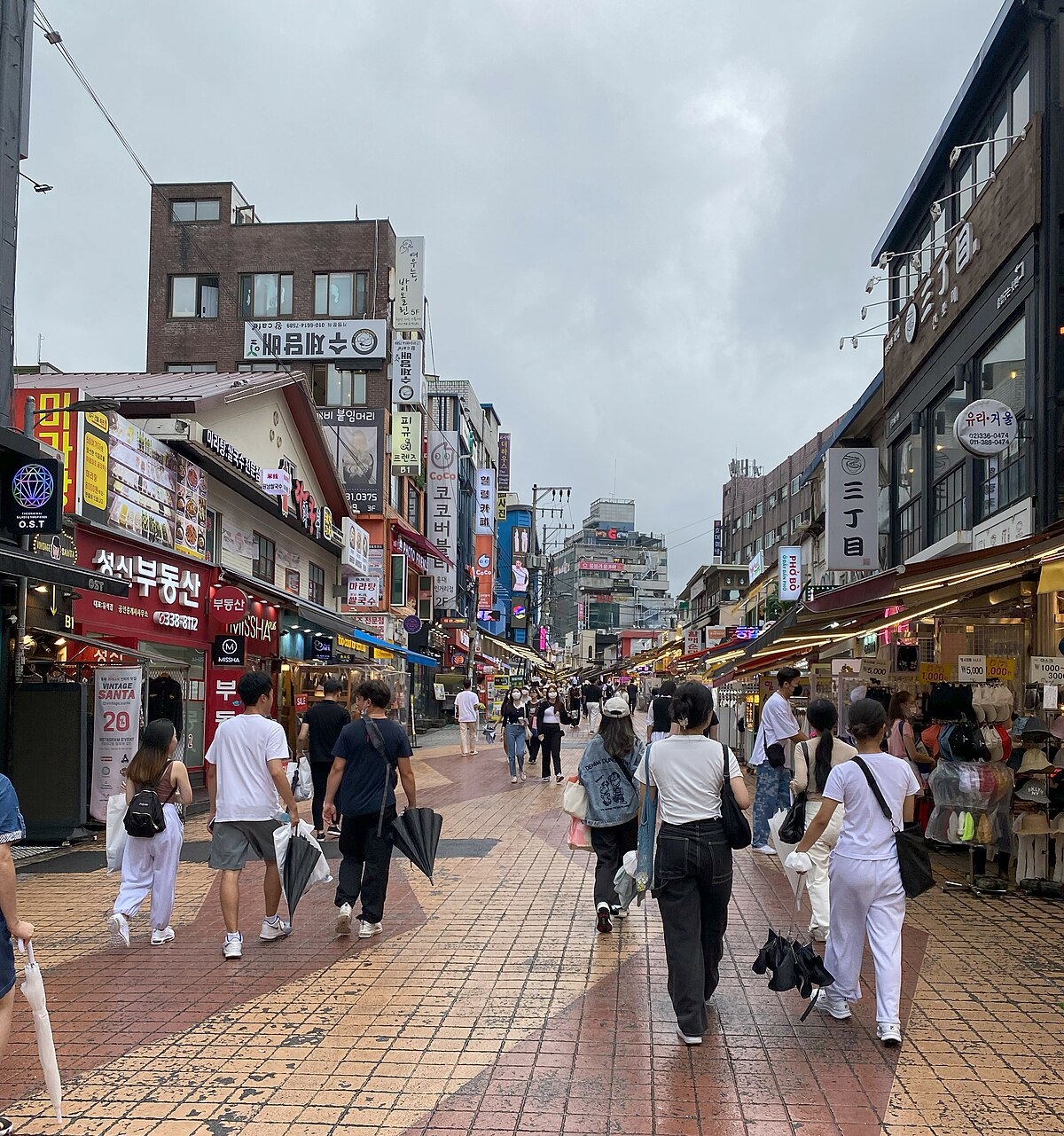
Thanks for uncovering these great indie groups in Korea. It’s really great to see Rock and Roll alive and well in Korea. Back in 2017 we went to this area called Hongdae near one of the big universities that has become famous for it’s pop culture, indie music and art scene. In the summer evenings it’s a wonderful place to hang out and take in the energetic vibe. I really enjoyed myself there when we visited. Next time I am back in Korea, I will go back there. Anyone visiting Seoul, I highly recommend checking out this area. Some great restaurants around there, interesting shops, and lots of outdoor busking and just overall fun and excitement.
-
Seollal 설날 (New Year’s day)
Today is Seollal, New Year’s Day in Korea. This is determined according to the Chinese lunar calendar and always falls on the new moon between January 21st and February 20th of the Gregorian calendar and therefore on the first day of the first month of the lunar calendar. Anyway…, Seollal is an official holiday in Korea, with a long tradition.
-
Hey Jurgen, thanks for posting this. Yes Seollal is the biggest holiday in Korea, similar to Christmas. For me it is a day my parents always held special and it was always a tradition to have rice cake soup (Tteok Gguk). it’s amazing all the variety of wonderful things you can create with rice cake (tteok).
Hearing a westerner speaking Korean always fascinates me, it’s uncanny how they just suddenly feel closer like family. It’s amazing what language can do, especially your mother tongue. While I by far am more prolific with English, having spoken Korean first as a baby with my parents, when someone who is not Korean speaks it, it feels so much more intimate. Thanks for thinking of me. 🙂
-
Hi Jurgen
Today is the big Seollal day for me here in Canada. Going to enjoy my traditional rice cake soup ( Tteuk Gook) now.
-
Saehae Bok Mani Badeuseyo Jung,
I wish you a great Seollal day and I hope that some wonderful and encouraging memories accompany you on this day. Enjoy your Tteuk Gook.
PS: If I understood correctly, 2024 is the year of the blue dragon “Cheong-ryong”?

-
Thank you Jurgen, I will, 🙂 and the Tteok Guuk was great. Last year was my year, year of the Rabbit. Apparently it works out that you turn 60 on your year.
-
-
Kuala Lumpur
Kuala Lumpur, the capital of Malaysia, has developed from a workers’ settlement into a modern global metropolis at a breathtaking pace. The cosmopolitan city is popular with travelers as a stopover. That’s how I got to know the city too. Malaysia’s capital is an incredibly diverse cultural melting pot. Chinese, Thais, Indians, Malays and also expats from Europe, the USA and Australia fill the city with life and culture, opening their places of worship to visitors and their restaurant kitchens to lovers of Asian food and drinks. The 452 m high Petronas Twin Towers are the landmark of Kuala Lumpur. Until 2004 they remained the tallest buildings in the world. Today they are still the tallest twin towers in the world. The skyline with the towers is now the symbol of Kuala Lumpur.
-
Malaysia is not necessarily the entry-level destination in Southeast Asia, although the country has almost 5,000 kilometers of coastline and many beautiful islands. Malaysia is a multi-ethnic state with a colorful mix of cultures. Here a Chinese quarter, there Buddhist and Hindu temples and in the background the call of the muezzin from the neighboring mosque. Here you will find great beaches surrounded by a fabulous underwater world with very good conditions for diving and snorkeling. There are also hiking and trekking trails through tea plantations and into the deep jungles of the national parks. A unique world of animals and plants is waiting for you. You can climb historic cities as well as the highest mountain in Southeast Asia. Traditional Malay music takes a little getting used to for Western ears. They comprise a wide range of wind, string, and percussion instruments, used by both the Malay majority as well as the nation’s ethnic minorities.
-
Estrella is a Malaysian jazz band formed in Ampang, Selangor in 2006. The band consists of five members and is known for their hit singles such as “Stay”, ” Turns Out” and “Take it Slow”. The group’s name comes from the Spanish word meaning star.
-
Borneo is just different. The largest island in Asia surprises with exciting history and incredible natural splendor. The rainforest on the island on the equator is one of the oldest in the world. Borneo has an area of around 751,000 square kilometers and is therefore almost twice as large as Germany. Due to history, the island is divided between three states: Indonesia in the south and Malaysia and Brunei in the north.
Here in the dense rainforest, which has existed on Borneo for 140 million years, is one of the refuges of the wild orangutans. Tropical rainforests are home to endangered great apes. In Borneo they are respectfully called “forest people” by the locals. Orangutans are only found here and on the neighboring island of Sumatra.
-
Ukays, also known as U.K’s, is a Malaysian rock band. The band was founded by Malaysian songwriter Saari Amri in 1986. The band rose to fame in 1994 with the release of their successful album Bisa Berbisa, which sold more than 400,000 units.
-
Sometimes it is difficult to clearly classify the music. The singer Raisa comes from Indonesia, but some of her song titles are of Malaysian origin. There are probably 36 different regional languages spoken there that are very similar to each other. It doesn’t matter. She definitely sings very nice ballads. The Malay song title “Nyawa dan Harapan” translates to “Life and Hope”.
-
In the south of the island of Borneo you can observe orangutans in the lush green rainforest. The Tanjung Puting Protected Area covers a total area of 4,150 square kilometers. But only a small part of the park is accessible to tourists. There are various “camps”, former release and rescue stations, where active orangutan rehabilitation work was carried out until a few years ago. Current estimates suggest that there are around 7,000 great apes in Tanjung Puting National Park. Especially in the summer months, food in the forest becomes quite scarce and rangers feed bananas, sugar cane and other fruits on wooden platforms.
“The monkeys don’t need mirrors – they have us”
– Gerd W. Heyse –
Log in to reply.